The forward region with the ITk
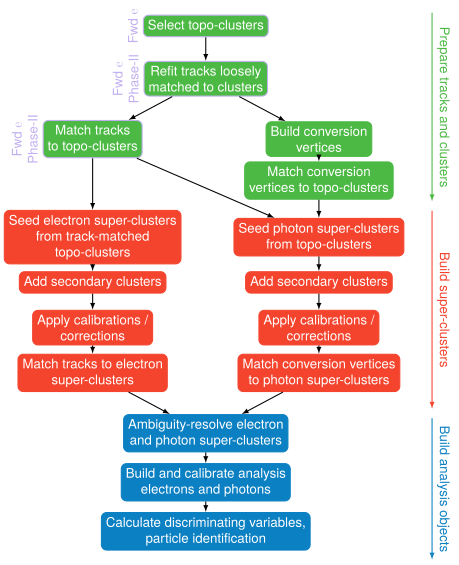
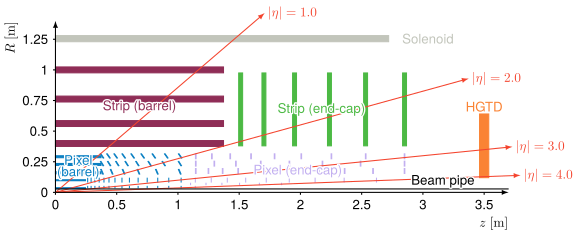
The replacement of the Inner Detector by the all-silicon ITk, together with the timing information from the HGTD, opens the forward region to track-based electron reconstruction for the first time in ATLAS. The work presented here exploited these new handles to develop a dedicated calibration and identification chain for forward electrons in the high-pile-up environment of the HL-LHC, extending the coverage out to .
Calibration
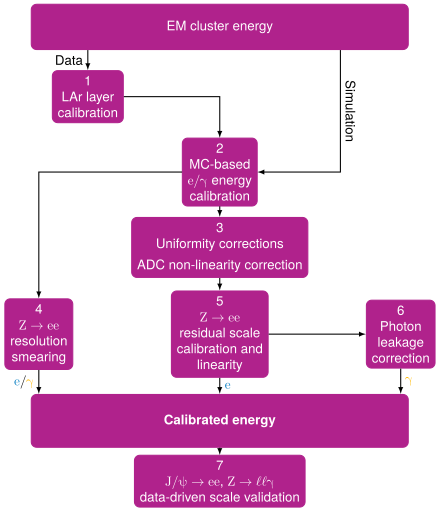
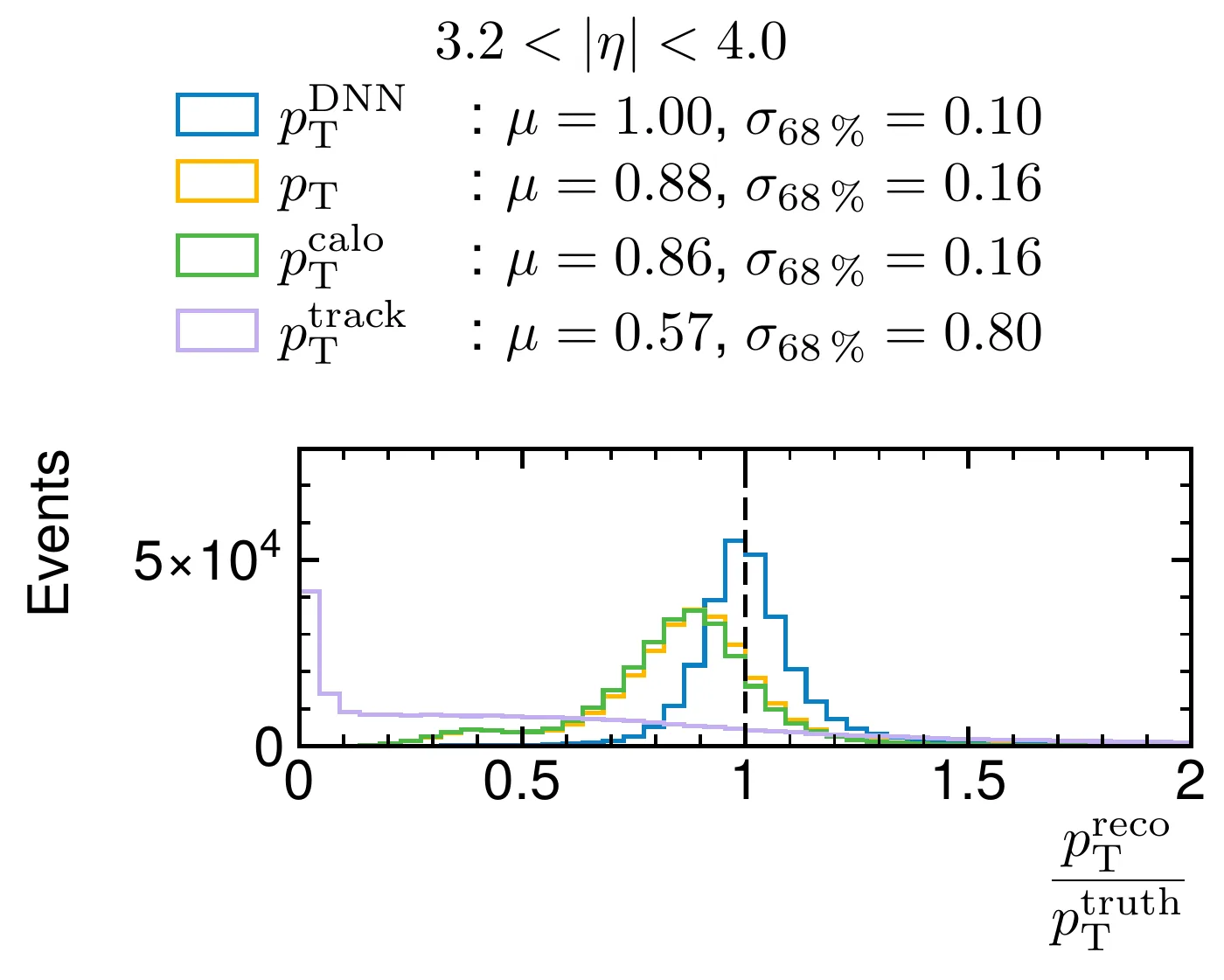
The -calibration was addressed with a DNN regression combining the cluster moments, the layer energy fractions, the tracker hits, the track–calorimeter matching variables, and the HGTD timing into a single calibrated estimator . The track-only measurement is unusable in the forward region owing to the very short lever arm, while the calorimeter-only and combined measurements suffer from a sizeable bias and broad tails, in particular in the forward calorimeter region. The DNN instead recovers a response centred on unity in all three bins, removing the bias, with a resolution equal to that of the calorimeter-based methods in the two inner bins and markedly better in the forward calorimeter region, where their tails are largest.
Identification
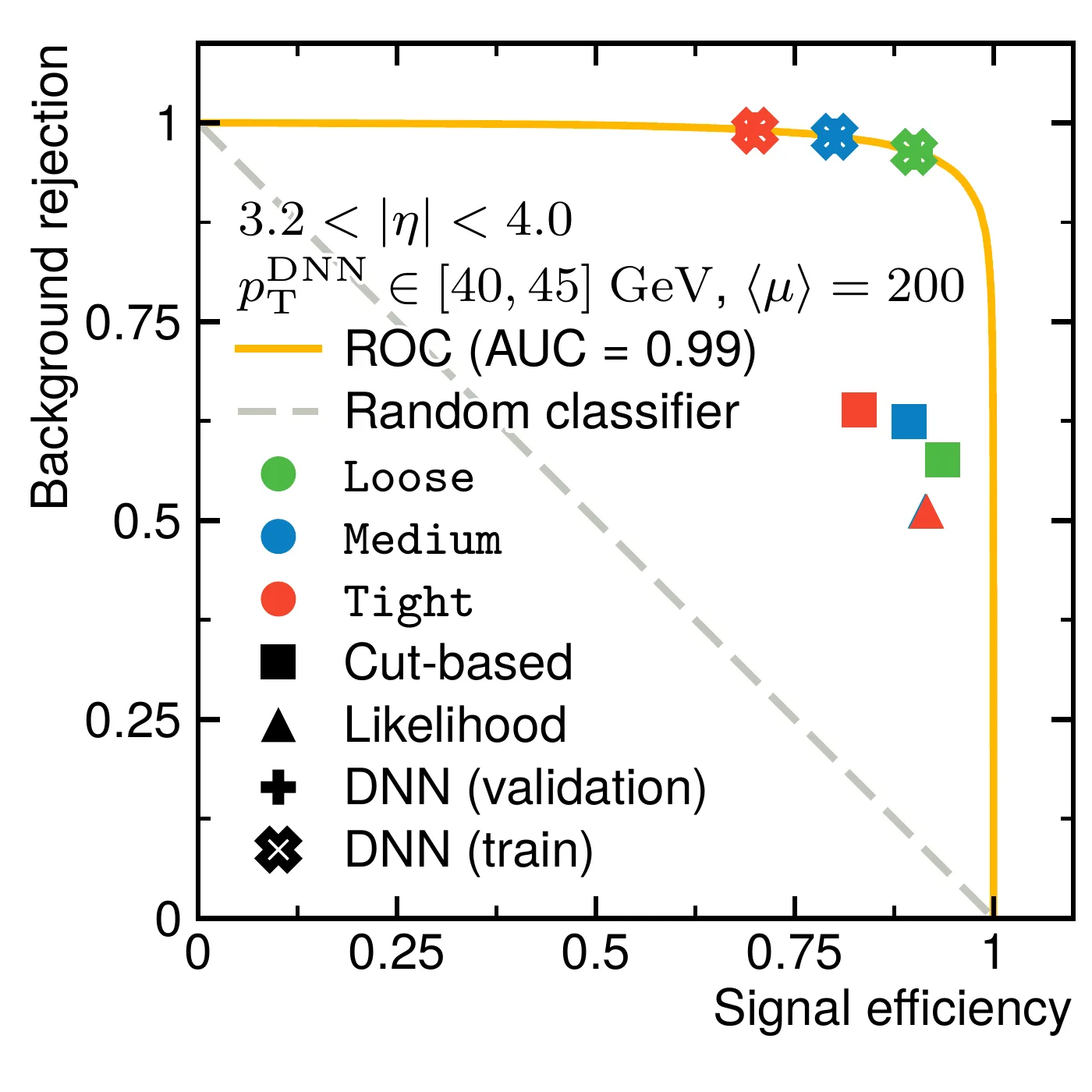
For the identification, a second DNN classifier was trained together with a -decorrelation technique, in which the cluster moments are replaced by the residuals of a linear regression against . This provides working points with a flat signal efficiency across the full range and a substantially better background rejection than the legacy LH and cluster-moment selections, which were not designed for the stringent conditions expected in Run-4. The decorrelation further enables a smooth and bounded extrapolation of the working-point thresholds beyond the training range, down to and up to . The complete chain, comprising the calibration, the identification, and the working-point definition, was implemented in Athena.