Path
Doctorate at LAPP, Annecy
Polarisation in VBS WZ, forward electrons for Run-4 in the Combined Performance group, and active learning for BSM scans with LAPTh. My research →
Master's internship (M2), LAPP
Coverage extension studies for future polarisation measurements in WZ events in the electroweak sector: preliminary studies for the thesis on the potential gain in sensitivity from the extension of the tracker coverage of ATLAS for the HL-LHC.
Master's internship (M1), IP2I Lyon
Application of Machine Learning to the sampling of high-dimensional supersymmetric parameter spaces: an active-learning method with DNN to scan efficiently the reduced phase spaces of the MSSM (pMSSM, NMFV). The method → · Redone as a project →
Bachelor's internship (L3), CENBG Bordeaux
Determination of the probability of two- and three-flavour neutrino oscillations. Redone as a project →
Bachelor's in Bordeaux, Master's in Lyon
Including C++, parallel computing, data science, and practicals with Geant4 and ROOT.
Research software
VBS-WZ-DNN
Deep neural networks (Keras / TensorFlow) for the VBS WZjj analysis: a four-class signal-versus-background network and three polarisation networks. The repository covers the full chain: hyperparameter optimisation, k-fold training, plots and comparisons, the 2D templates binned with Voronoi regions, and the export of the trained networks to C++ and Fortran.
VBS-WZ-fit
The statistical analysis. No fit configuration is edited by hand: TRExFitter configurations are generated from modular Python blocks (samples, normalisation factors, systematics), run, and post-processed into plots and LaTeX tables, for each polarisation measurement, run period (Run-2, Run-3, combined) and blinding state.
Forward-electron calibration and identification
DNN calibration and identification of forward electrons for the HL-LHC, one network per bin, converted to JSON and validated inside Athena, the ATLAS software.
Is the network using all the information?
A standalone framework that answers, in bits, how much of the information the input variables carry about the label the analysis network actually extracts. Information theory gives the zero point a ROC curve lacks: for any model scored on unseen events, , so a cross-entropy is a certified lower bound on mutual information.
Every thesis figure, reproducible
The 290 script-made figures of the thesis, in its own style and at the size it includes them, each with the numbers it is drawn from, so that any figure can be redrawn and restyled on a laptop, without the grid storage or the analysis software.
The thesis schemes
109 schemes drawn in TikZ, from detectors to Feynman diagrams and a Standard Model in Lego bricks, with a standalone preview and a check that they stay identical to the thesis's copies.
Writing tools for the thesis
A lint that turns the writing conventions into searches, so that a class of defect is found exhaustively instead of being sampled by a reader, and change-tracking tools (latexdiff modes, changed tables and figures) for the reviewers.
Slides from the thesis
A Beamer template, and a defence talk whose figures and numbers are derived from the thesis sources rather than retyped, so the two cannot disagree.
Teaching material
Introduction to Python
The Jupyter notebooks of the introduction to Python I taught at Université Savoie Mont Blanc.
Interactive data display
A Dash and Plotly web app to explore ROOT ntuples interactively, packaged in a container and deployed with Kubernetes.
Physics simulations
The hydrogen atom
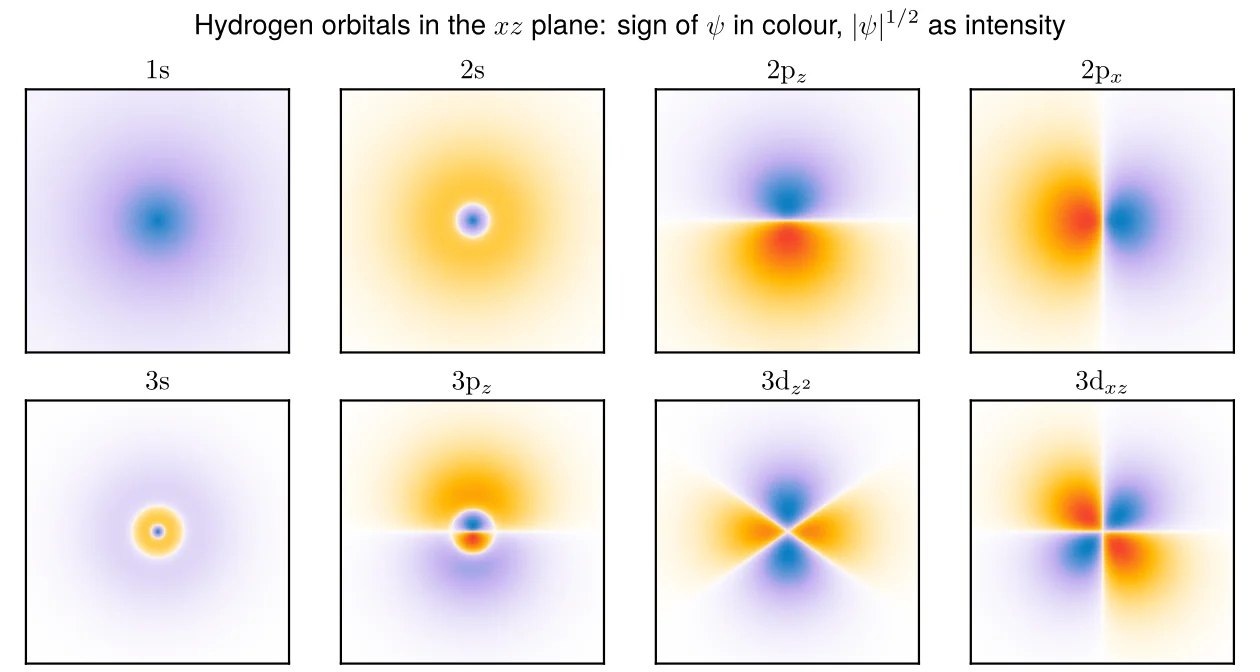
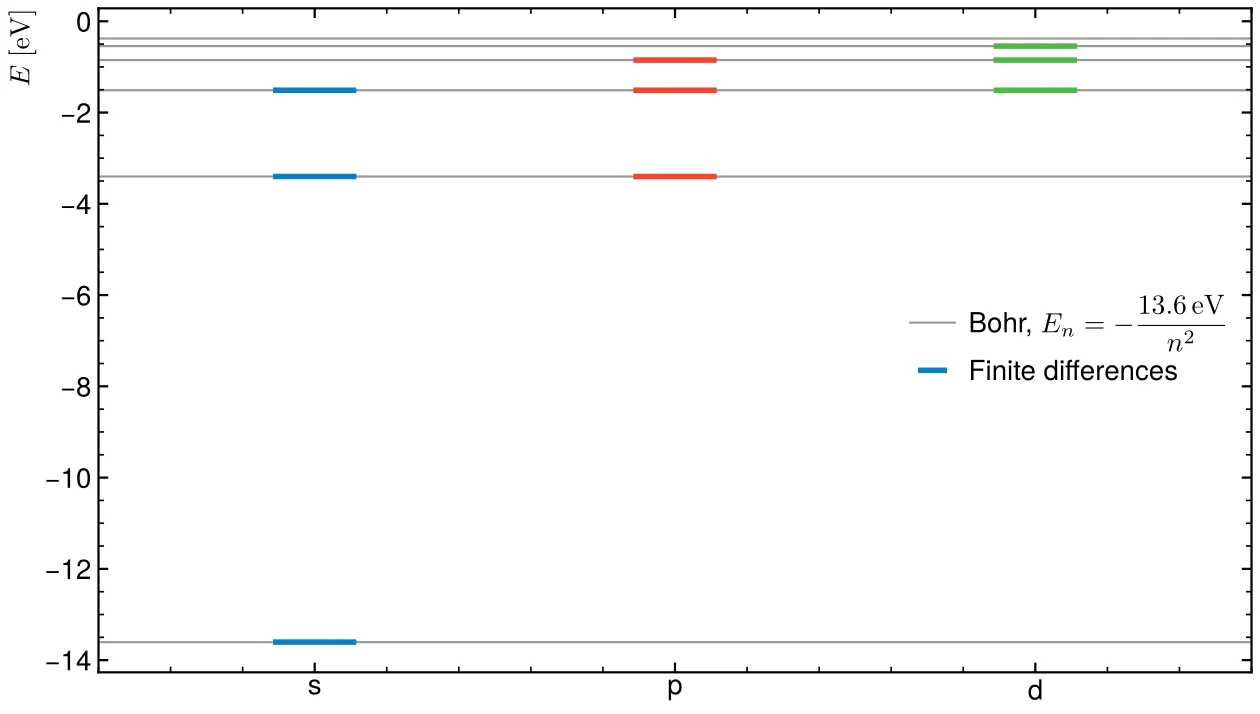
The radial Schrödinger equation solved with finite differences as a tridiagonal eigenvalue problem: the levels depend on only, as the Coulomb potential predicts, and match Bohr's within . The s, p and d orbitals are drawn from the exact wave functions, whose radial parts agree with the numerical ones.
The H₂ molecule: bond and vibrations
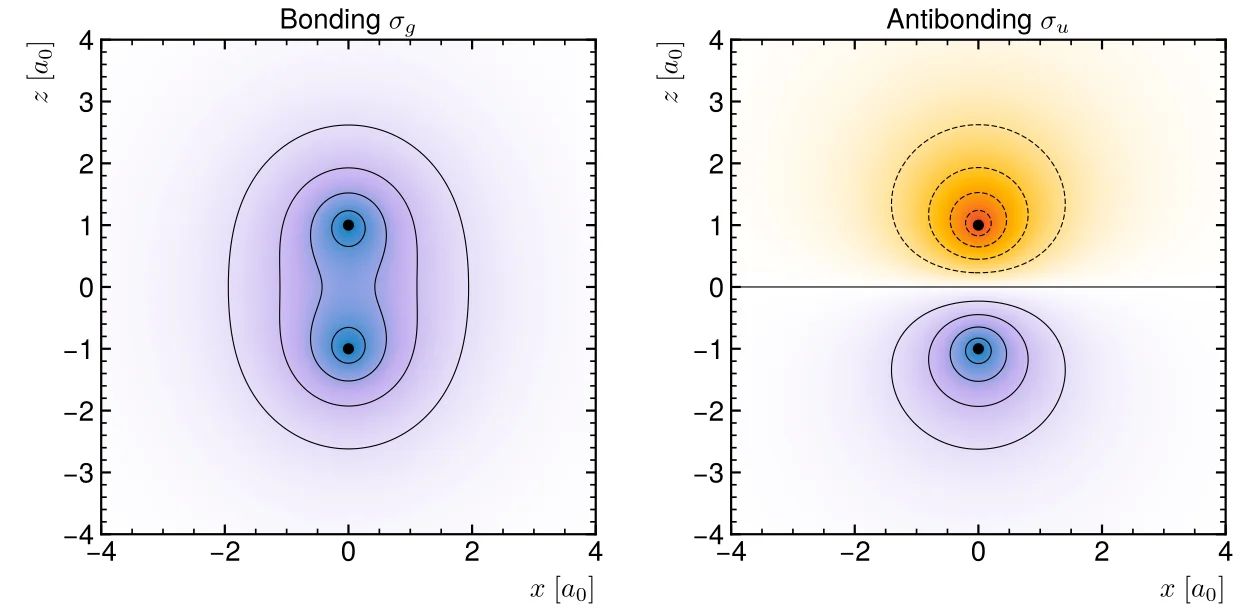
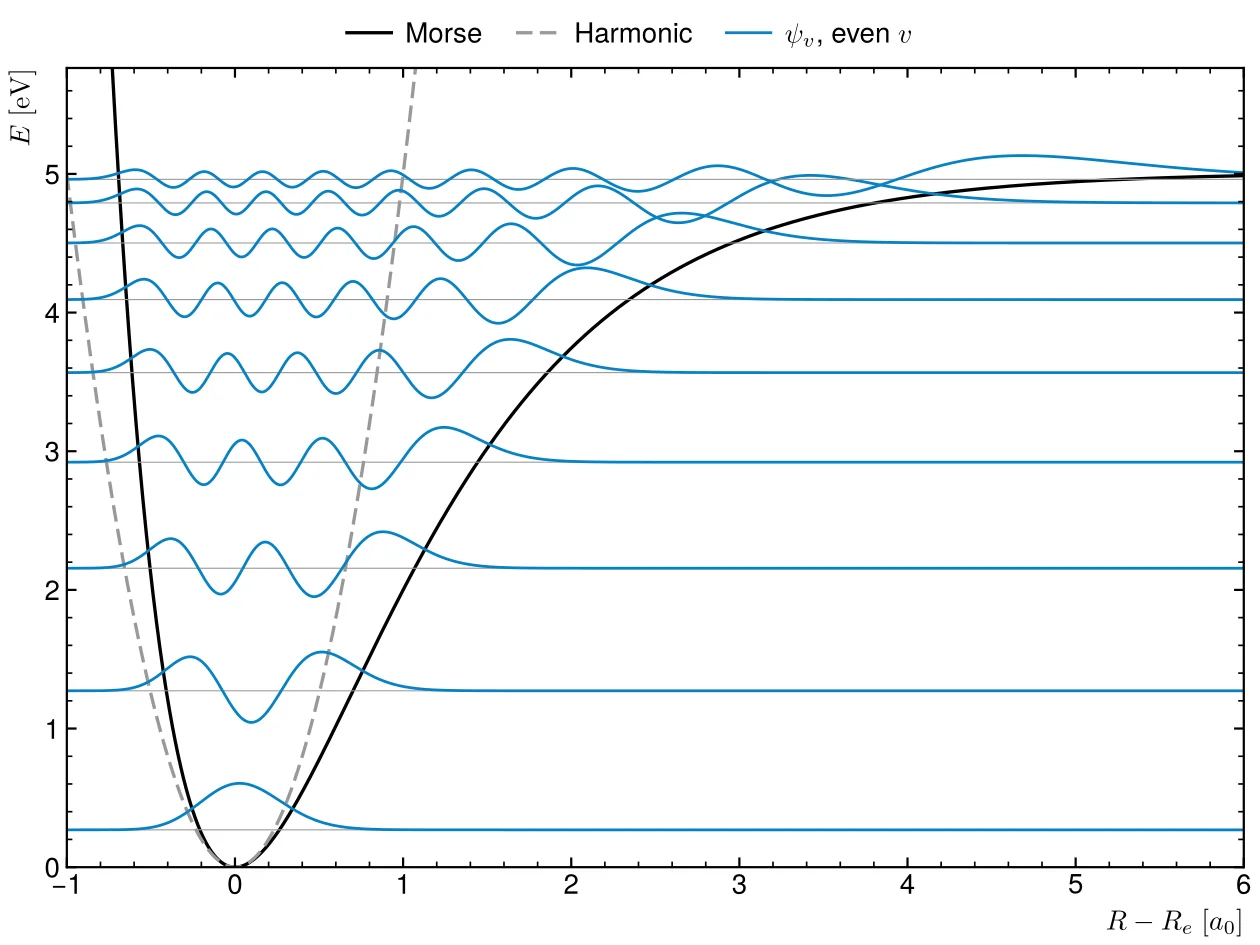
The bond of with LCAO orbitals (bonding , antibonding ), and the vibrational levels of in a Morse potential: all 18 bound levels match the exact Morse spectrum within , and crowd together towards dissociation where the harmonic picture fails.
Quantum tunnelling of a wave packet
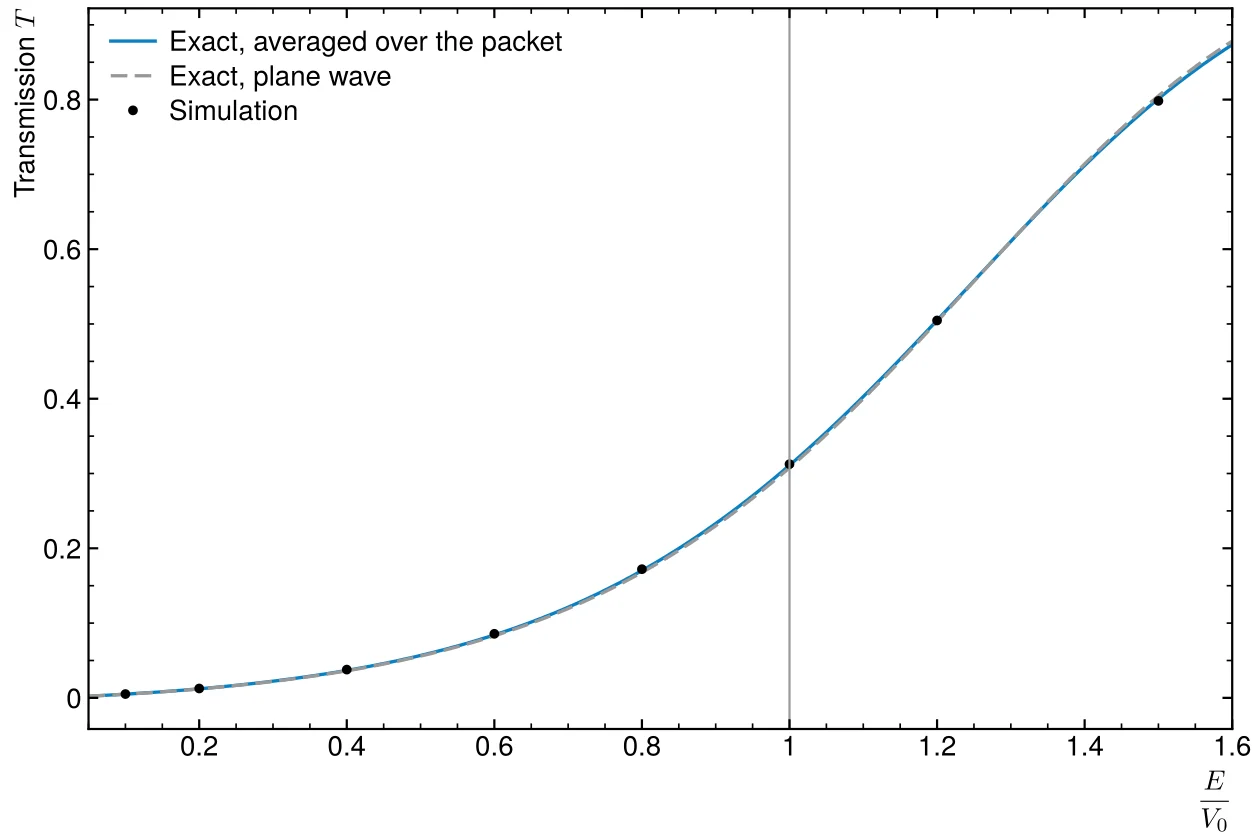
A Gaussian wave packet hits a square barrier. The 1D time-dependent Schrödinger equation is solved with the split-step Fourier method, which conserves the norm to machine precision, and the transmitted probability is checked against the exact plane-wave result averaged over the packet's momentum distribution: they agree within from = 0.1 to 1.5.
The 2D Ising model
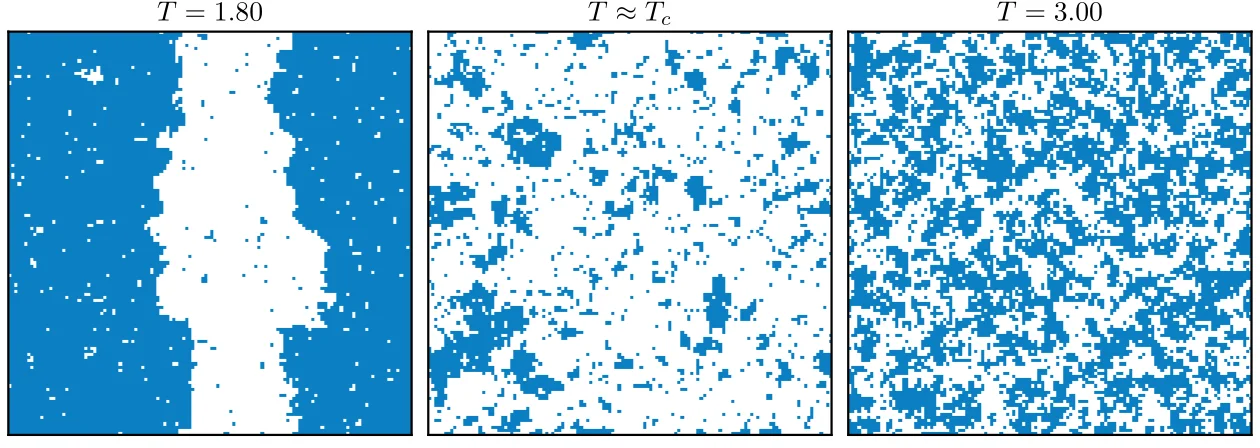
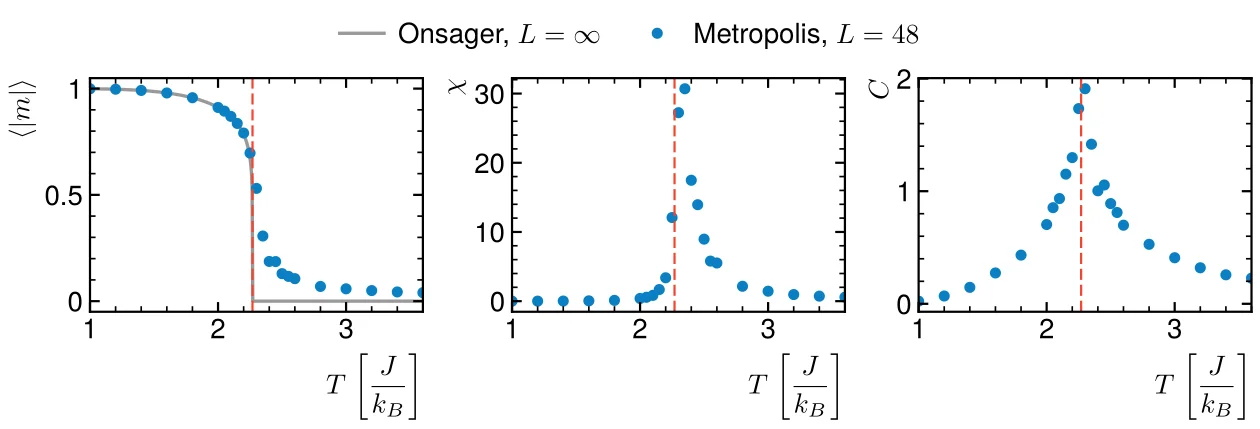
The ferromagnetic transition with the Metropolis algorithm on a lattice, updated as a checkerboard with numpy. Below the magnetisation matches Onsager's exact solution to better than 0.01; near the finite lattice rounds the transition.
Molecular dynamics of liquid argon in C++
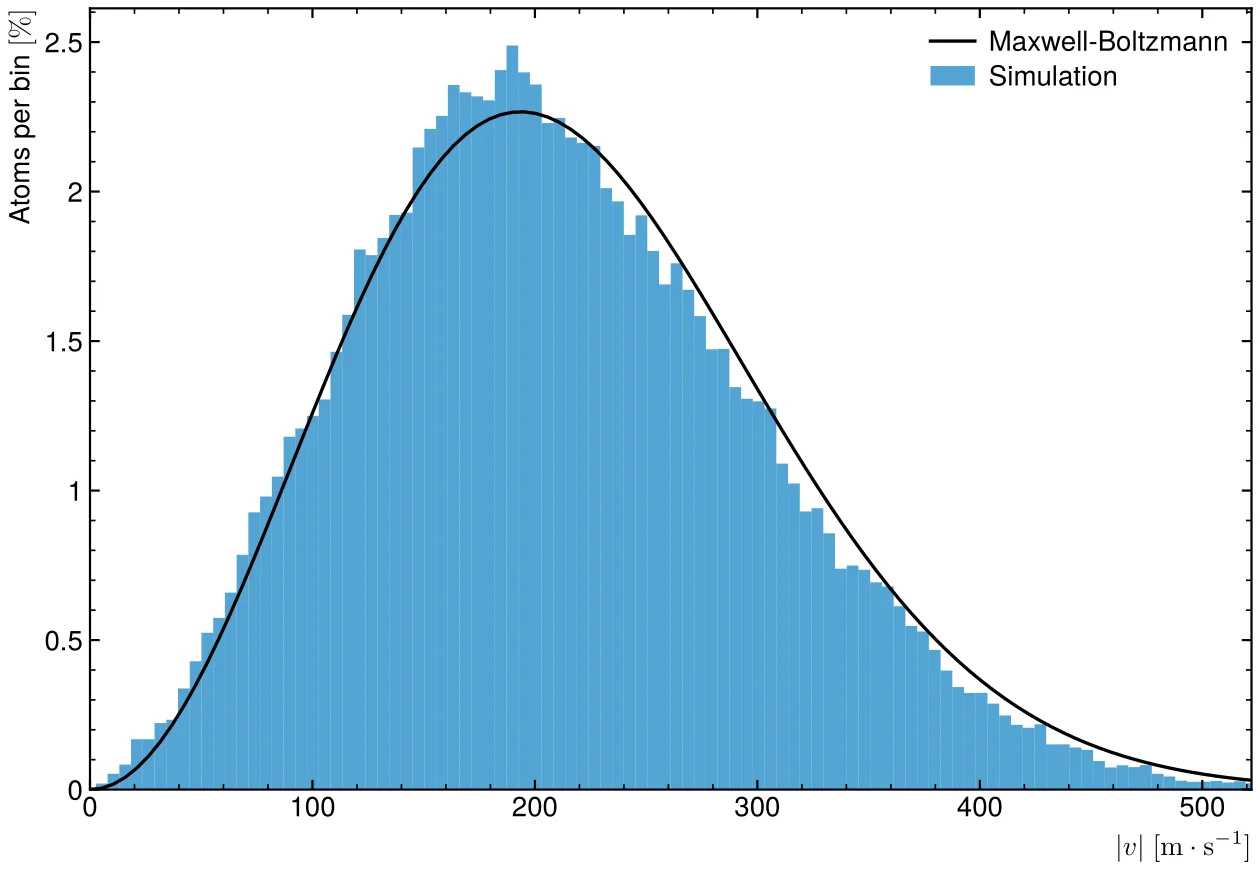
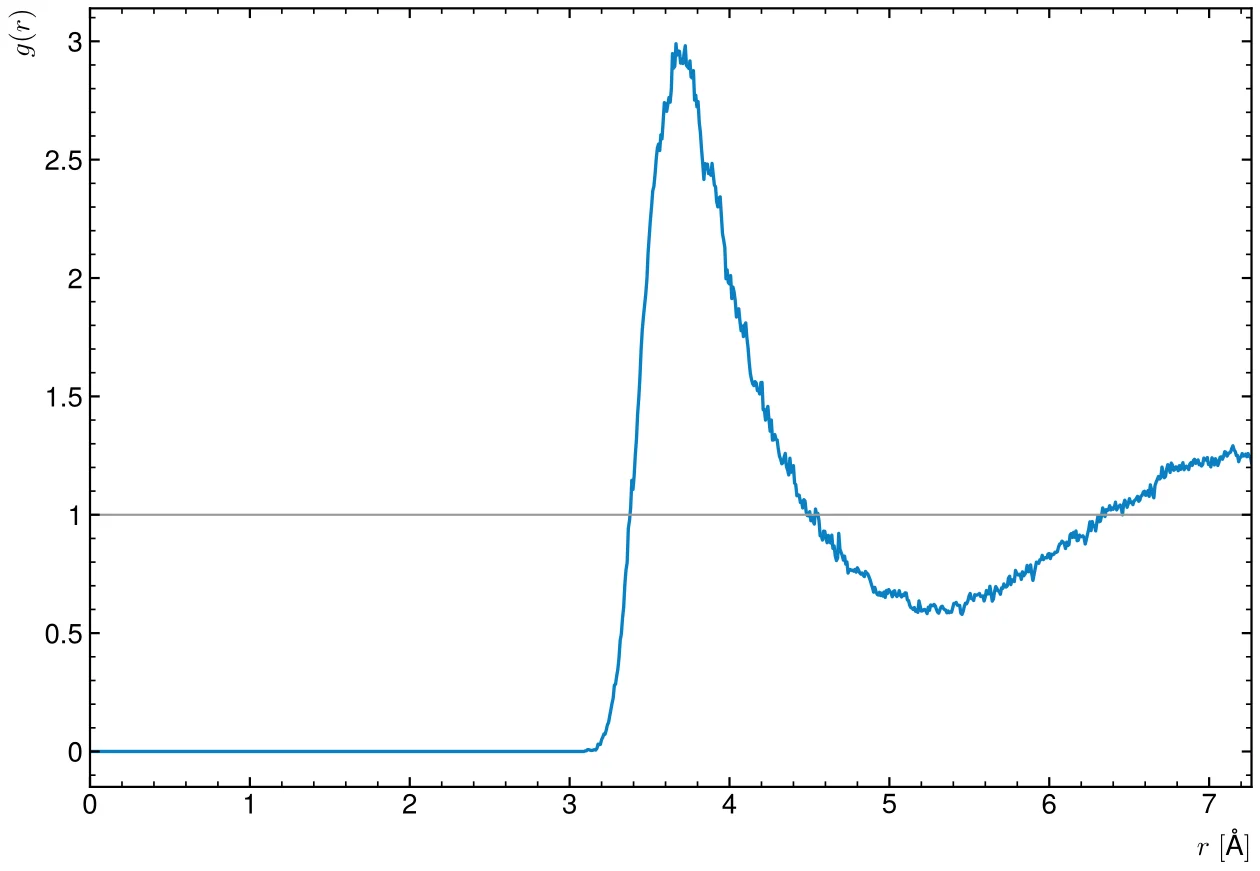
argon atoms in a periodic box interacting through a Lennard-Jones potential, with four integrators to compare (Euler, Verlet, leapfrog, Runge–Kutta 4), a thermostat and simulated annealing. Verlet keeps the total energy within over , the speeds follow Maxwell–Boltzmann, and shows the first-neighbour shell of a liquid at .
The solar system as an N-body problem
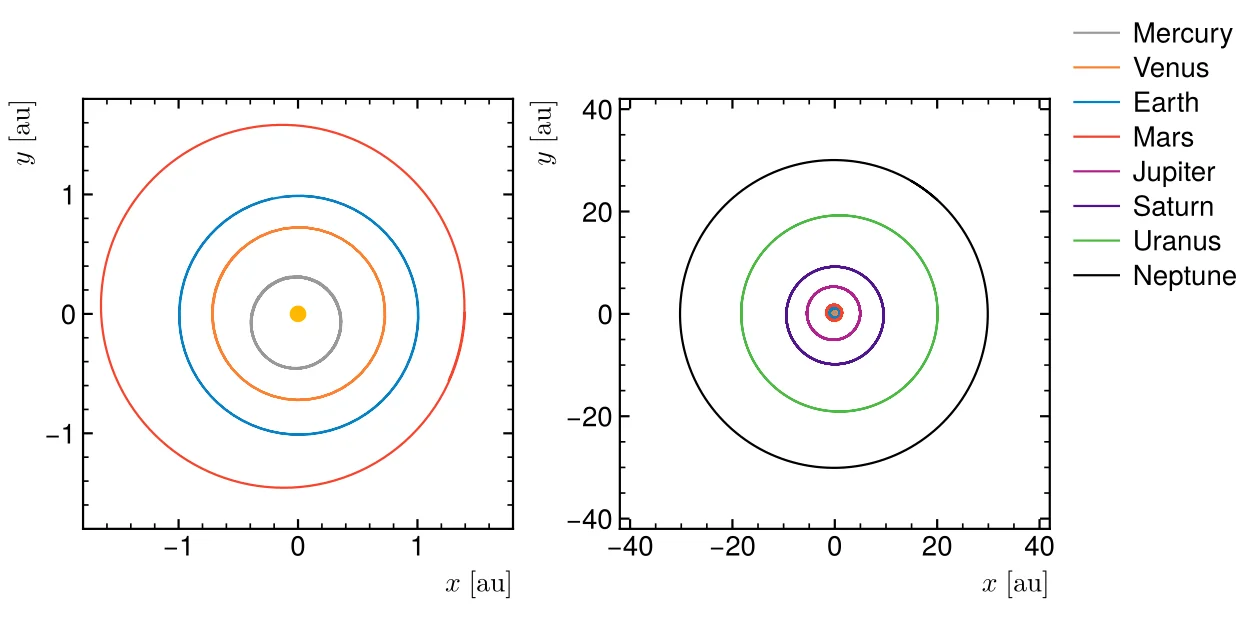
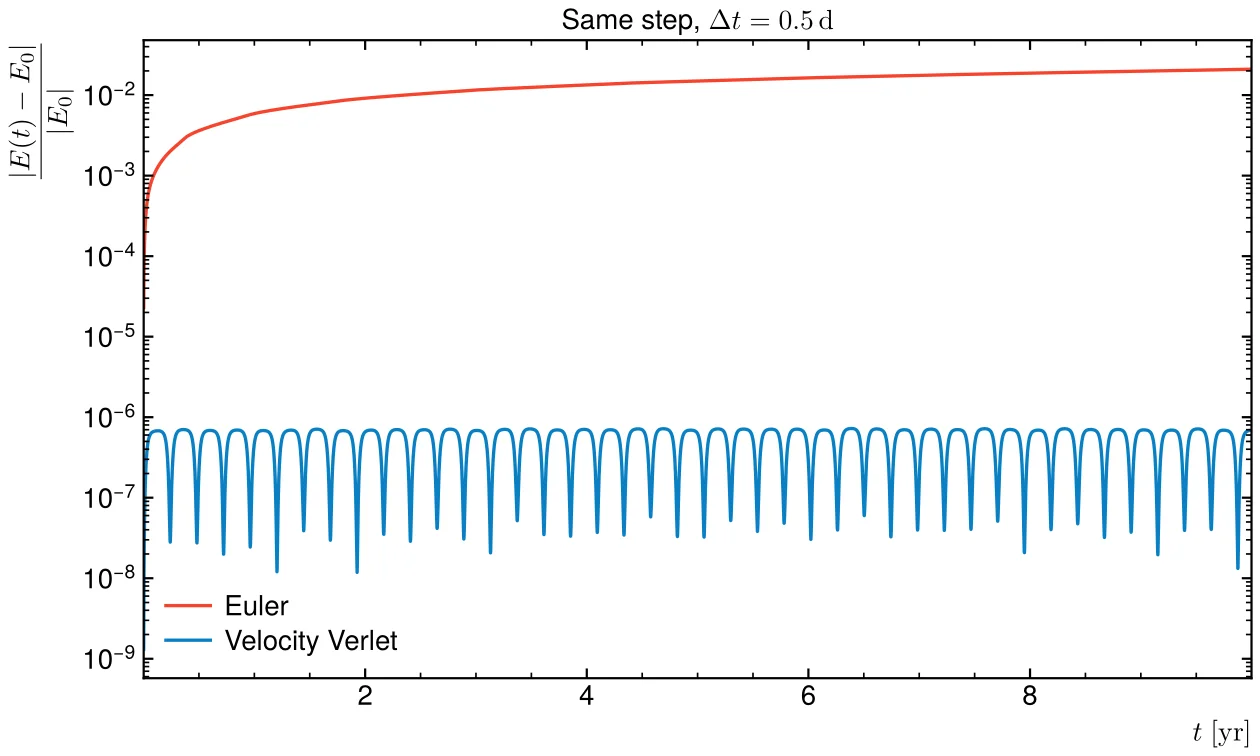
The Sun and the eight planets integrated with velocity Verlet over one orbit of Neptune, in astronomical units (). The periods follow Kepler's third law within , the gap being the planets' pull on each other, and the energy stays within over 170 years where explicit Euler loses in 10.
The nonlinear pendulum
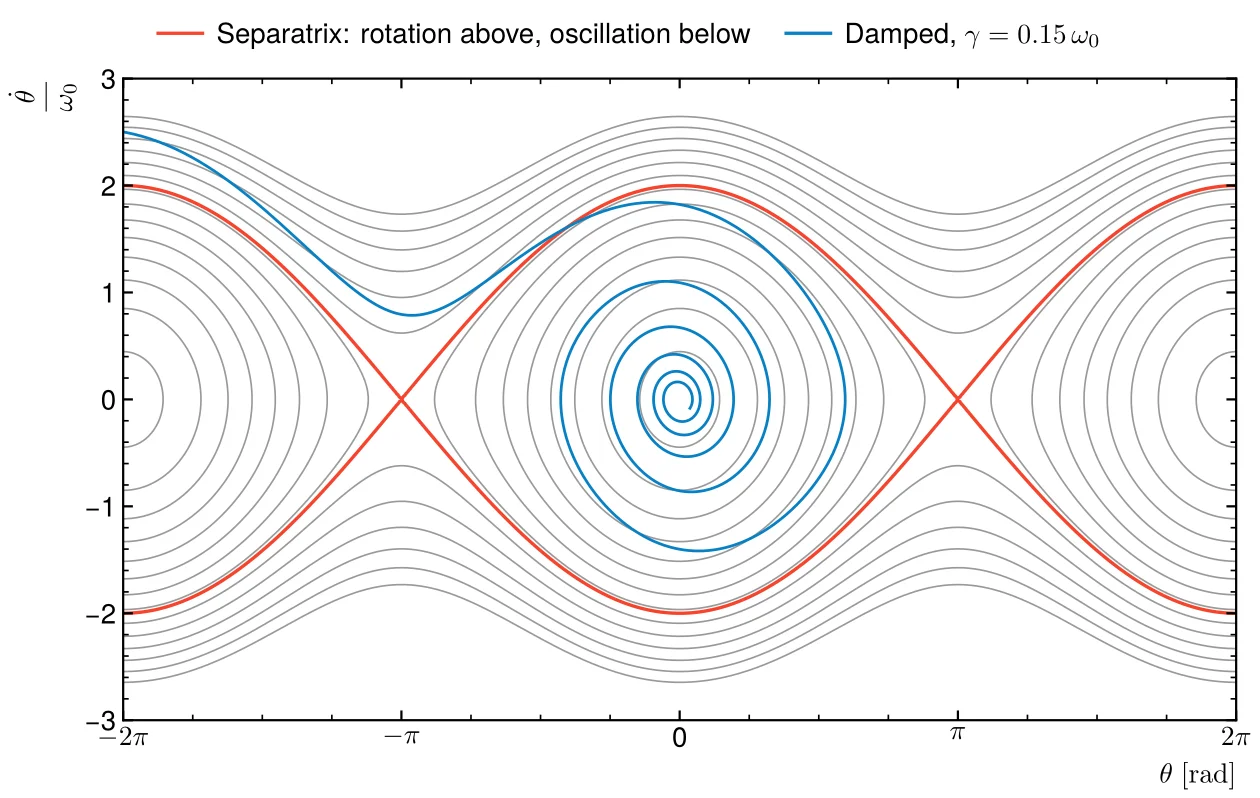
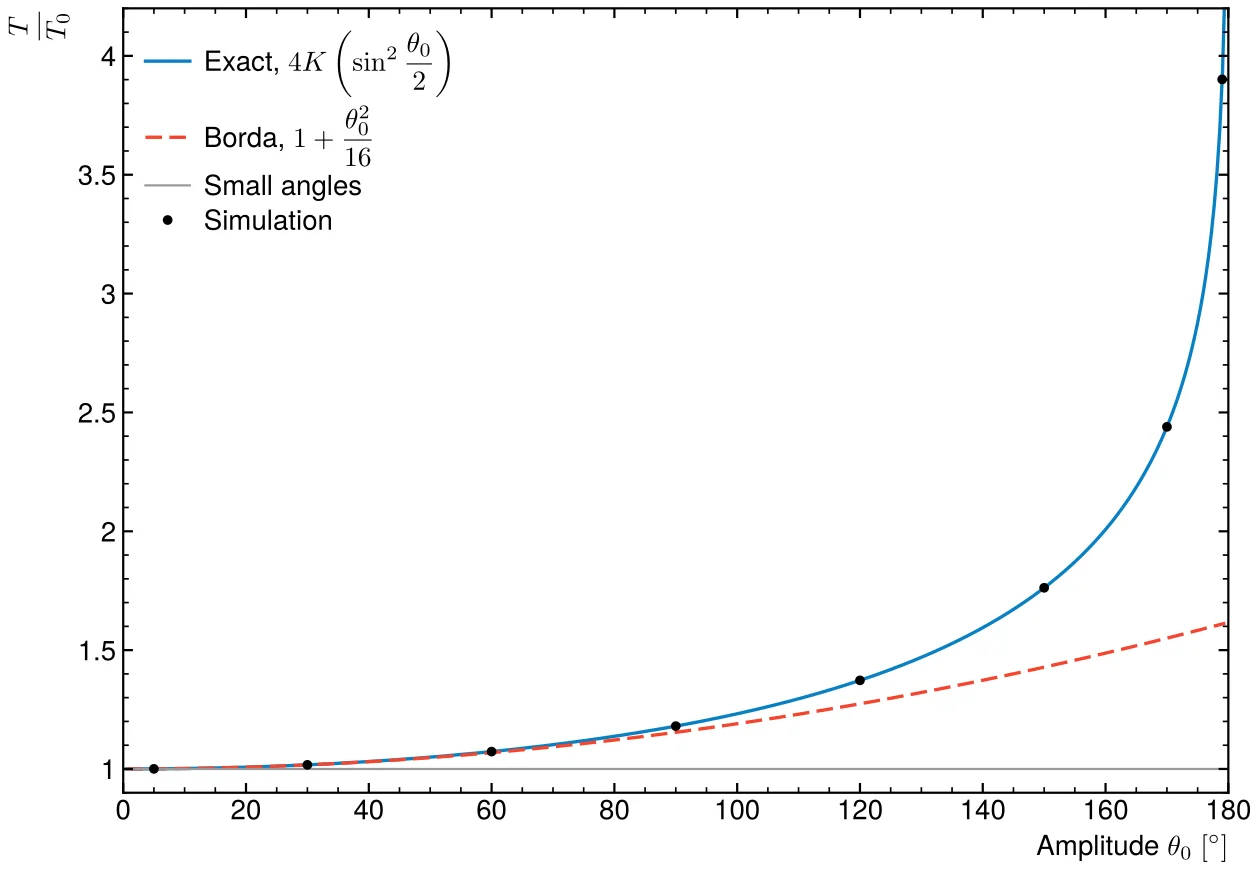
The pendulum without the small-angle approximation, integrated at a relative tolerance of : the period matches the elliptic-integral formula to six digits and diverges as the amplitude reaches 180°. The phase portrait separates oscillations from full rotations, and a damped trajectory crosses the separatrix.
The magnetic field of a solenoid
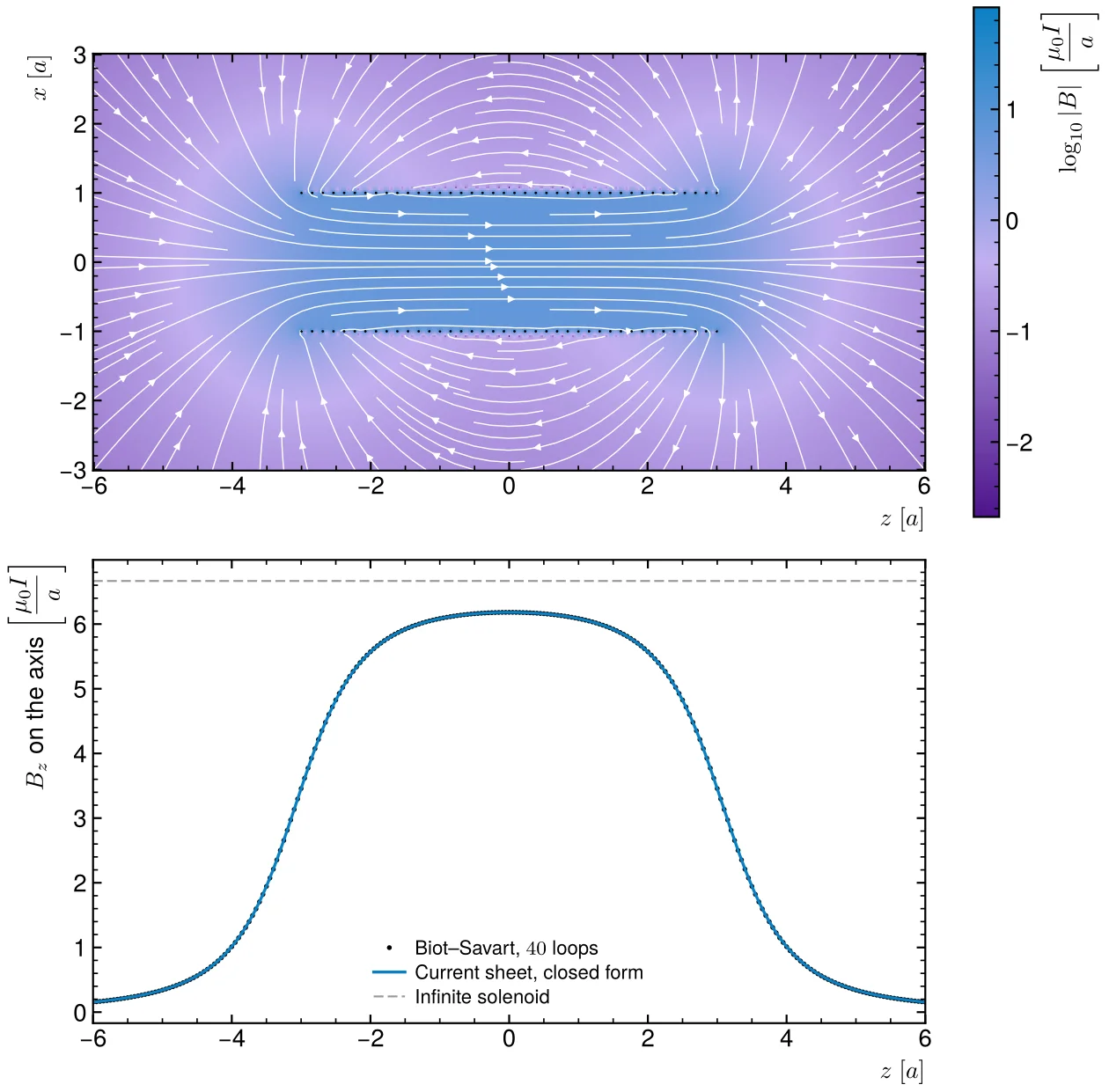
The field of a finite solenoid everywhere in space, as a sum of 40 loops whose Biot–Savart field is written with elliptic integrals. On the axis it matches the current-sheet formula within ; at the centre it is below the infinite-solenoid value, since a coil six radii long leaks field at its ends.
Attenuation of gamma rays
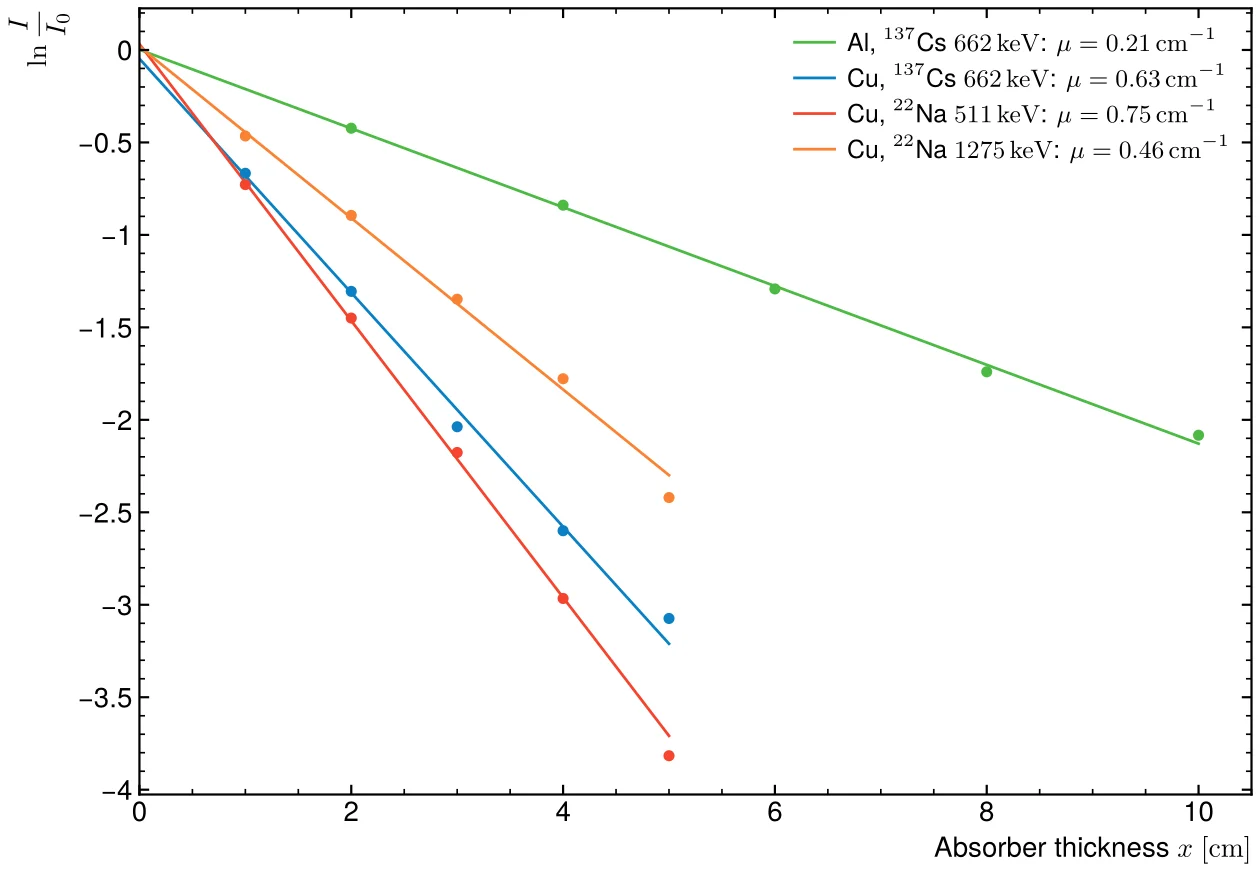
and gammas through aluminium and copper plates, measured with a NaI scintillator. Beer–Lambert fits of the photopeak give attenuation coefficients within of the NIST XCOM values, falling with energy as Compton scattering takes over from the photoelectric effect.
Machine learning to sample the pMSSM
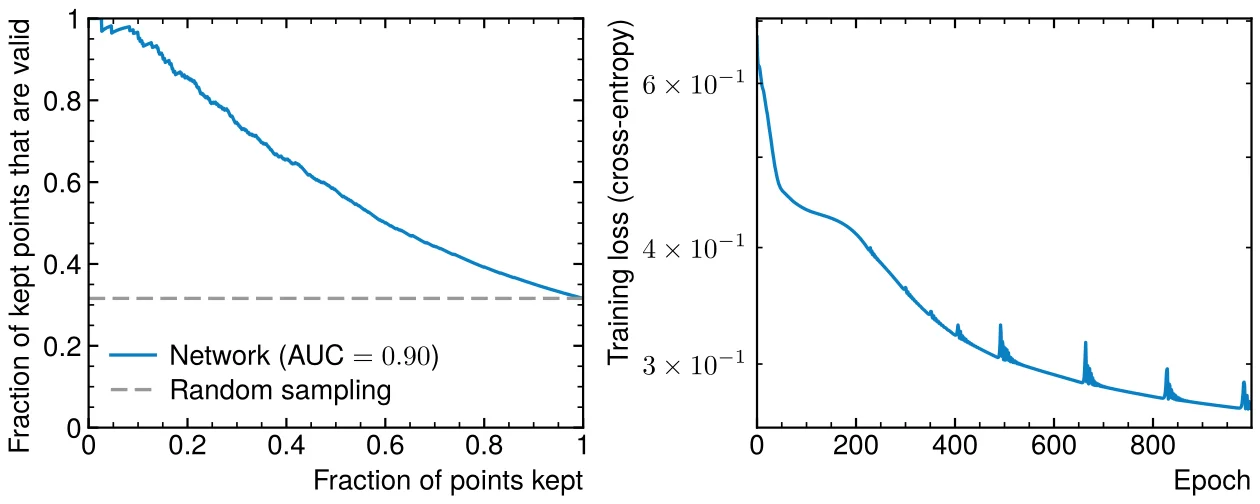
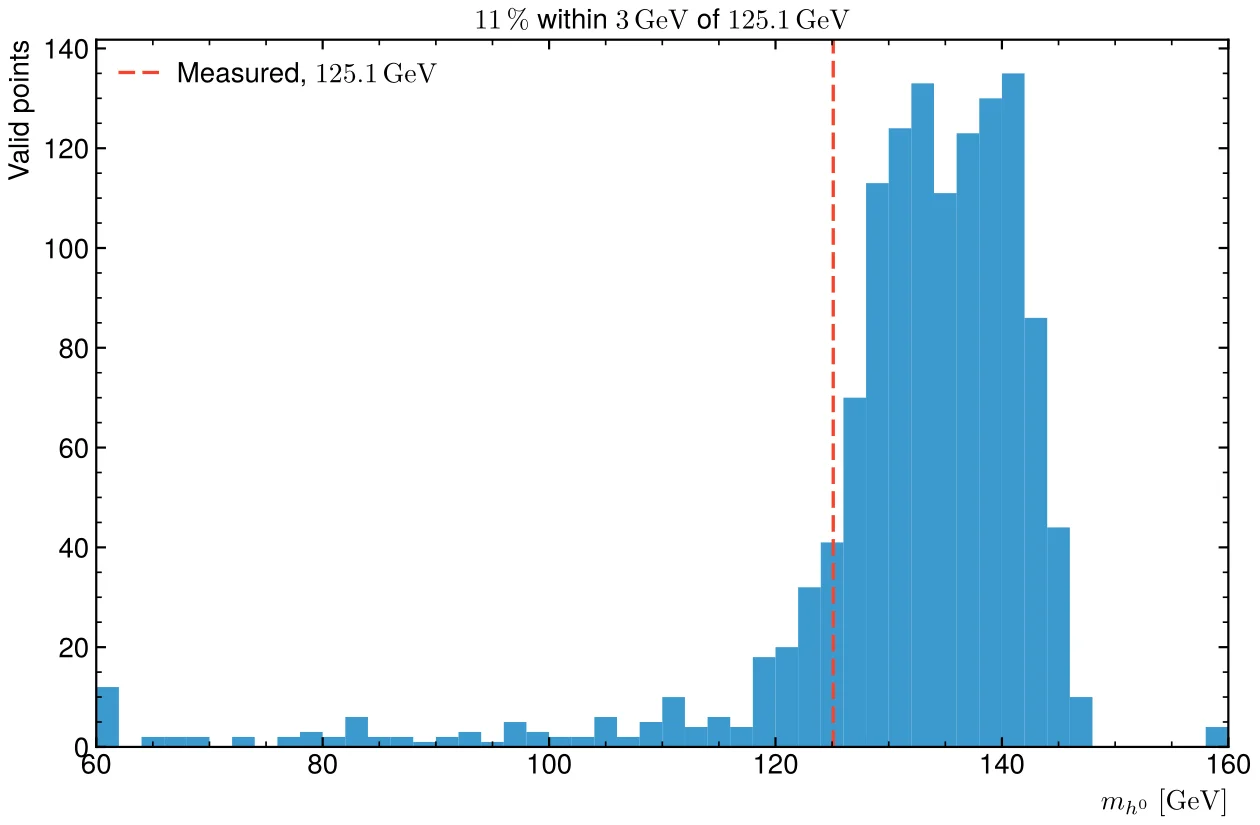
Most random points of the 19-parameter pMSSM give no physical spectrum: only pass SOFTSUSY. A neural network written in plain numpy (backpropagation by hand, Adam) learns which ones survive, with a ROC AUC of 0.90: keeping the best-scored half doubles the valid fraction and loses fewer than one valid point in ten. Of the valid points, have a lightest Higgs boson within of the measured .
Finding GW150914 with a matched filter
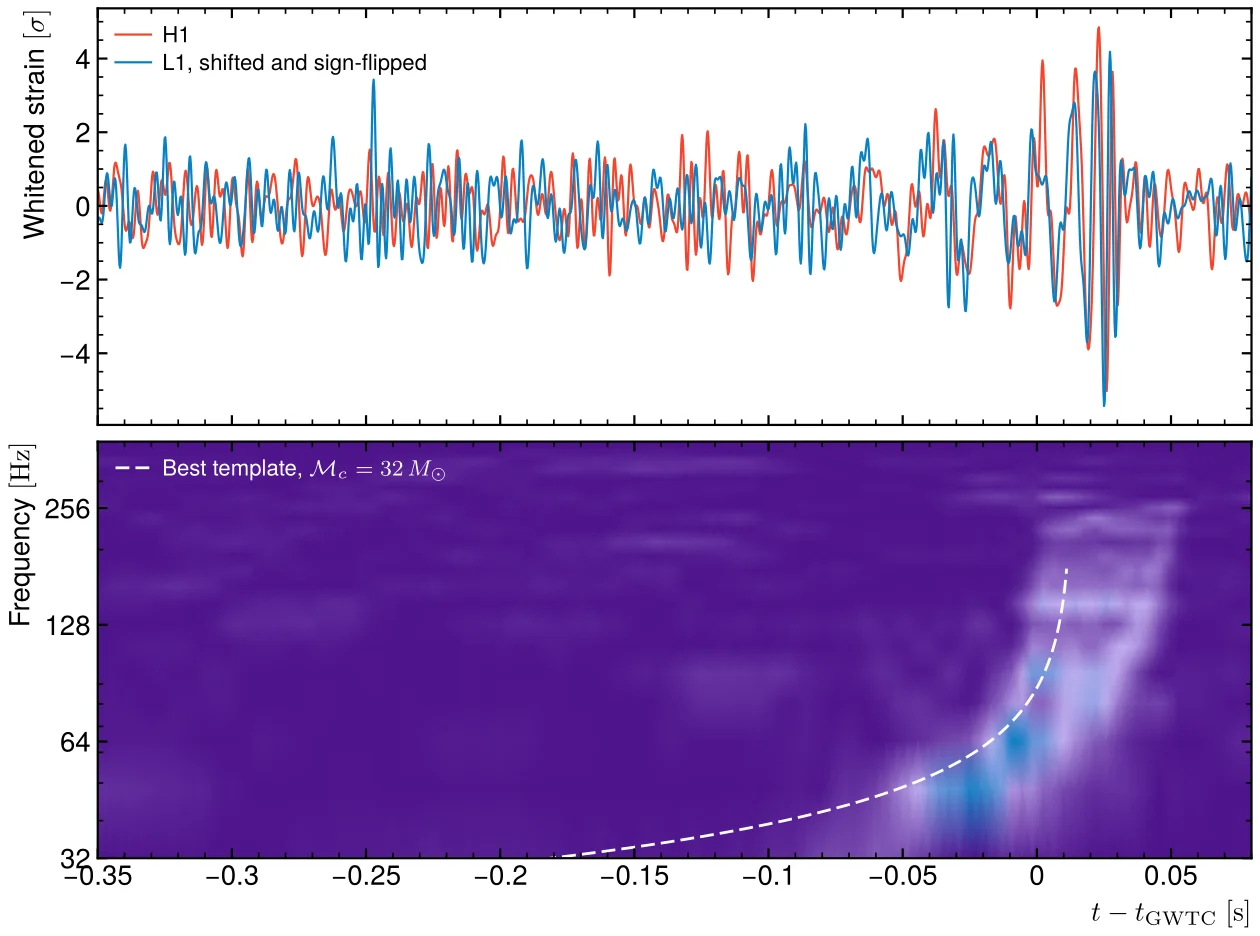
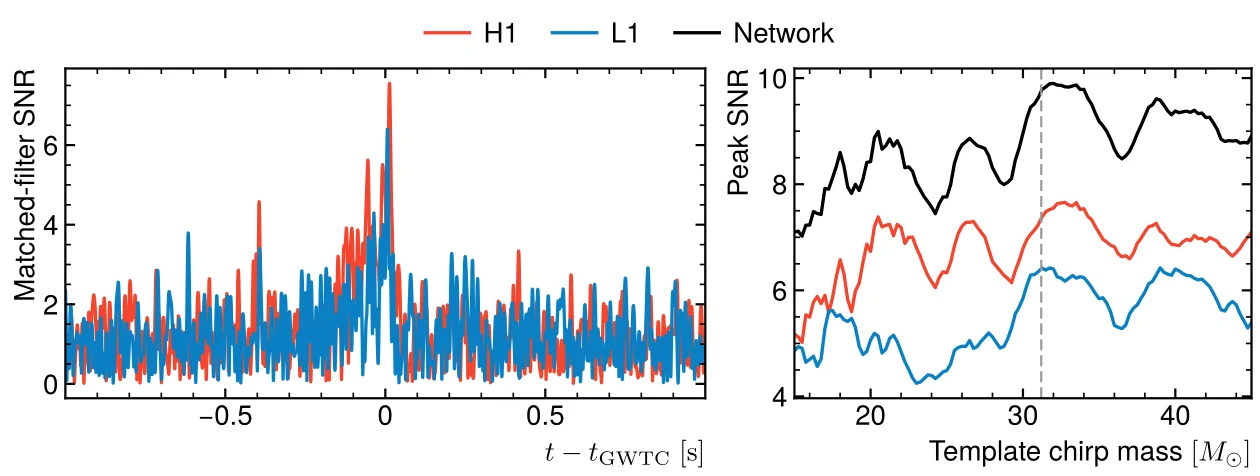
The first binary black-hole merger recovered from the public LIGO strain with numpy only: noise spectrum estimated from the data, whitening, and a matched filter over a bank of inspiral chirps. The network SNR peaks at 9.9, Livingston sees it before Hanford, and the best chirp mass, 32 , is close to the catalogue's 31 in the detector frame.
Neutrino oscillations
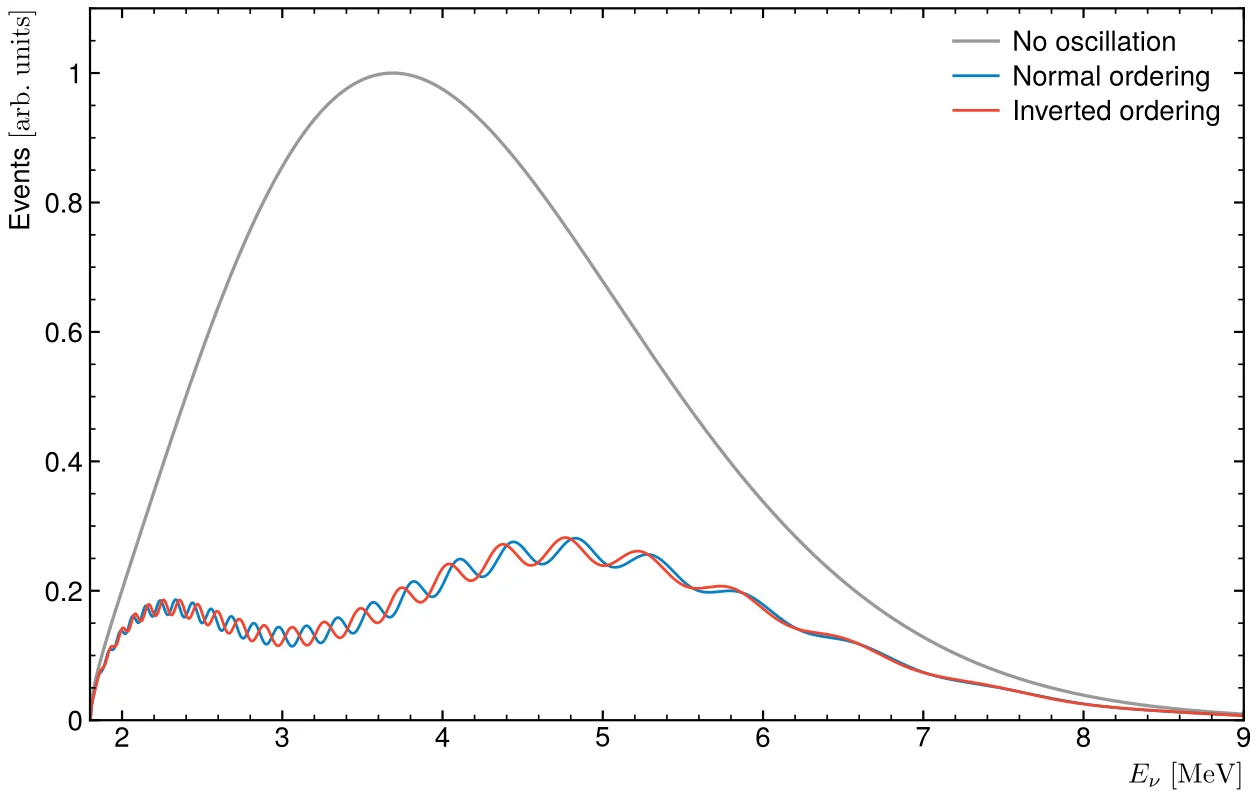
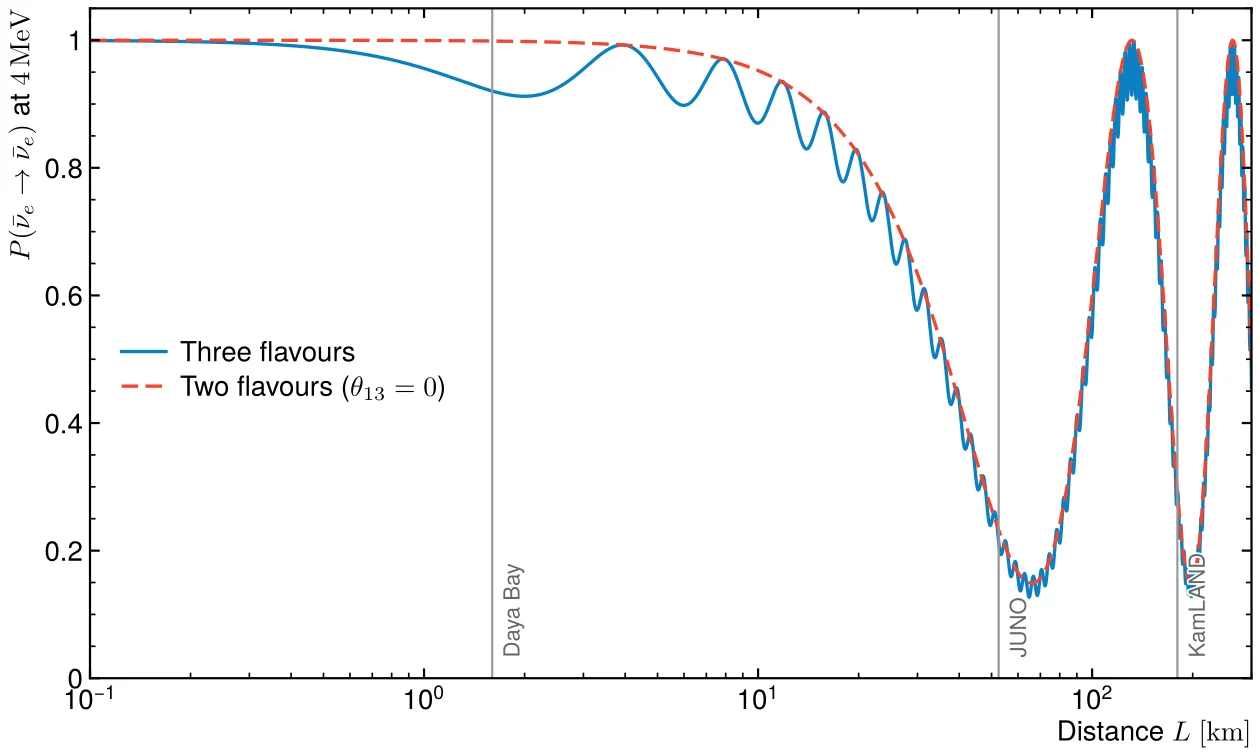
Three-flavour oscillations from the PMNS matrix, checked against unitarity and the closed-form reactor survival to , up to the spectrum a reactor experiment like JUNO measures at : the fast wiggles shift between the normal and inverted mass orderings.
Personal projects
This website
Written in HTML and CSS, built by a small Python script: the equations are written in LaTeX and rendered in the thesis's math font, and the plots and schemes come from the thesis sources. The site is available in English and in French.
Triathlon training analytics
Five seasons of training rebuilt from the recordings, the method that organises them, and the plan towards an Ironman: PDFs and a static site
produced from hand-editable text files, offline, with a single make. A small phone dashboard reads it.
Self-hosted home server in progress
Photos, files and the training dashboard served from home with Docker, reachable only through a VPN, with single sign-on, two-factor authentication and encrypted backups.
Reproducible workstation
One script rebuilds my Ubuntu laptop from scratch: packages, dotfiles, editor and shell setup, backups, and the colour palette and fonts used across all my documents.
Advent of Code
Programming puzzles each December, in Python.
Outreach
Since 2024, I am a CERN Guide and present the LHC and its experiments to visitors. I also took part in the Journée de la Science at LAPP and gave the lectures of an introduction to Python at Université Savoie Mont Blanc.